Are you building a team that performs, or a team that depends on you?
When you've been promoted largely because you're good at solving problems, it's easy to miss the moment those problems start arriving at your door by default. When I was 31 I became a Group Buying Director with a team of 6 Buying Directors reporting to me and a large P&L I was responsible for. Because I had been promoted from the role of Buying Director, I knew their role inside and out. I had seen it all! So my team would come to me for guidance A LOT. At the time it felt like a sign that I was doing the job well. People trusted me, they came to me, and I always had an answer.
It took me longer than I'd like to admit to see what that was costing me and the business.

What's actually going on
Being the person with all the answers is one of the most rewarding positions in any organisation. It's also very hard to give up, because it's usually the reason you got promoted in the first place. You were fast, you were across the detail, and you could be relied on to fix things. So when you step into a bigger remit, the instinct is to carry on doing what worked, just across more ground.
For a while it does work. Results stay strong, your team sees you as capable and decisive, and senior colleagues see someone who's got everything under control. Meanwhile the load quietly builds up. Decisions queue behind your calendar, your team starts checking with you before they act, and you find yourself working evenings to stay on top of things that other people should be owning.
One leader I recently spoke with described it as being a high performer who'd taken on far more than anyone could realistically manage! She was working around the clock, struggling to delegate without feeling guilty, and the strong results she was delivering were coming at a real personal cost. She felt that she was well on the way to burning out. What's striking (and all too common) is that she looked like she was on top of everything and doing really well.
Why we hold on
There are a few reasons this pattern is so sticky, and many of them make total sense on the surface.
You have high standards, and you know you can do something quickly and well. Handing it over means accepting that it might be done differently, or a bit less well, at least at first. You might also feel that your value comes from being the one who delivers, which makes letting go feel like a risk to your credibility. And in many commercial environments, where the pressure is constant and the stakes are real, it simply feels safer to keep your hands on the controls.
What I've noticed, both in my own career and in the leaders I speak to, is that this approach has a ceiling. Your capacity is finite, and your team's capability is only as developed as you allow it to be. When everything routes through you, the business can't move faster than you can.
A different question to ask
Running a large operation taught me that the question that matters most isn't how much you can personally get done. It's what the business would look like if it could perform well without needing you in every conversation.
That's an uncomfortable question for a lot of senior leaders, myself included. It asks you to look honestly at whether your team is capable and confident, or whether they've learned, quite reasonably, that the safest option is to wait for you. It also asks what you'd be doing with your time if you weren't busy being the answer. For most leaders I know, the honest reply is that they'd be working on the things that really need a senior mind: where the business is heading, how the leadership team works together, and what capability they need to build for the next stage of growth.
Some things worth reflecting on
If this sounds familiar, you might find it useful to sit with a few questions.
- Which decisions came to you this week that someone else could have made, and what stopped them making it?
- When you step in and take something over, what are you protecting? Is it the standard, the speed, or your own comfort?
- Does your team know what great looks like in their roles, in enough detail to get there without you?
- How would your people describe what happens when they make a mistake?
- If you were away for three weeks, what would genuinely fall over, and what would simply be done a bit differently?
Your answers may be all over the place right now. Often they point to a mix of things you've been doing out of habit and a few that really do need your hand on them. Sorting out which is which is where the work starts.
I'd also say there's no shame in recognising this pattern. It's one of the most common things I see in capable, committed leaders, and it usually shows up precisely because they care so much about the business and the people in it.
If you'd like a confidential space to think through what's changing in your own remit, you can book a conversation with me through the website, and I'd be glad to hear what's on your mind.

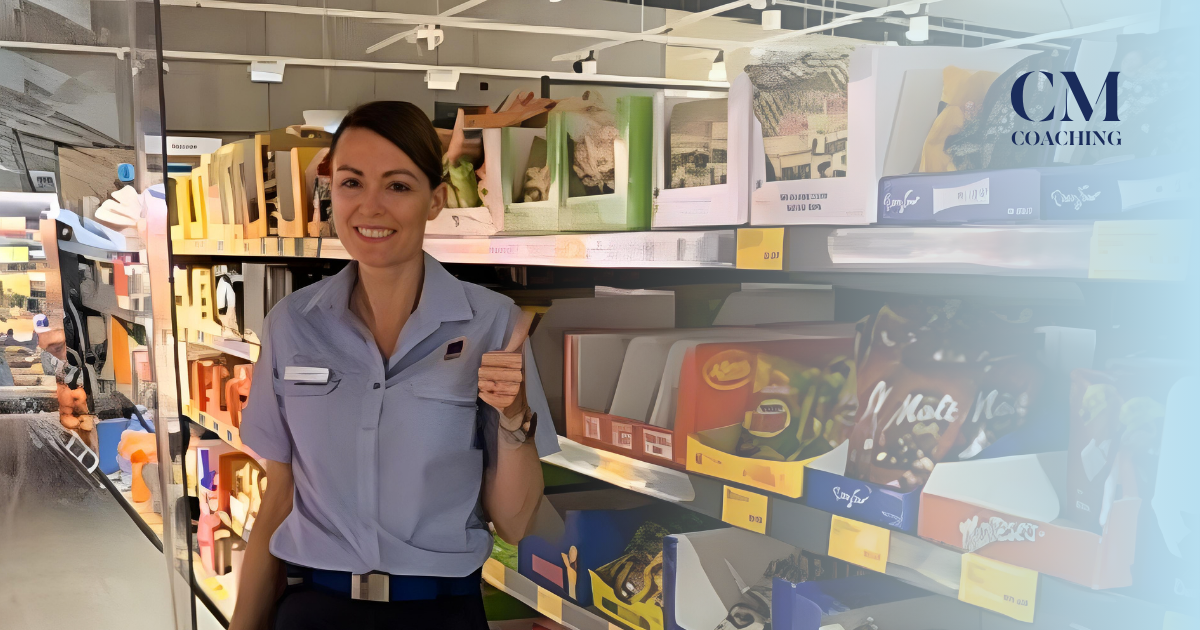
Caroline MacPhail is an executive coach and mentor. She spent 20 years at ALDI, including as Managing Director in Australia, where she led a $450m business and 850 people. She now works with senior commercial leaders on leading by design rather than by default.




I coach leaders at organisations including
Woolworths · Coles · Jaycar · Pet Circle · Lounge Lovers · Diebold Nixdorf
Better leadership starts with better thinking.
Gain instant insights into your leadership style with our complimentary Leadership Quiz.